
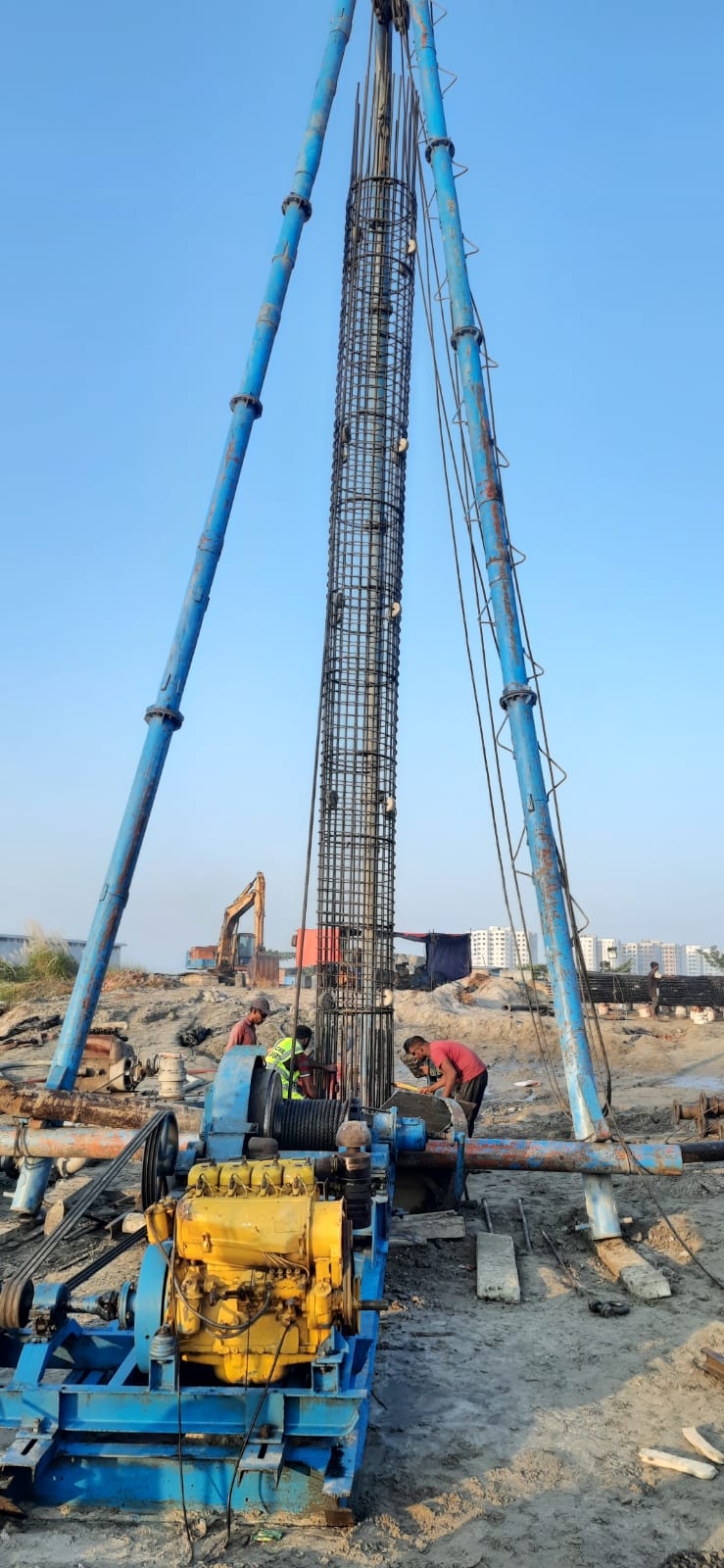
What is pilling
The implementation of pile foundations involves the
strategic insertion of vertical columns into the ground to provide reinforced
support for a building's substructure. By transferring vertical and lateral
loads to deeper, more stable geological formations, piling ensures long-term
structural integrity. This method is particularly indispensable when
traditional shallow foundations are deemed insufficient due to poor soil
conditions, high water tables, or excessive compressibility of the upper soil
horizons.
Types of pile?
Pile foundations are long, thin elements generally made of
steel or reinforced concrete. They transfer the load through weak, compressible
material onto more compact, less compressible stiffer soil or rock at greater
depth. The deep insertion of these elements ensures a sturdy base on which the
construction project can take place.
It’s important to note that the pile foundation and pile are
two different things, yet they work in conjunction to ensure that piling can
support strong loads. A pile foundation is typically defined as the series of
columns that act as the base for structures, whereas the pile itself is the
column or cylinder that aids in transferring the load to the lower subsoil.
The classification of deep foundations
The classification of deep foundations primarily
distinguishes between end-bearing and friction piles, based on
their method of load transfer.
- End-Bearing
Piles: These elements function essentially as columns, transmitting
the majority of the superstructure’s load through the shaft directly onto
a high-capacity stratum, such as bedrock or exceptionally dense gravel.
The load-bearing capacity is derived almost exclusively from the
resistance of the pile tip (toe) against the hard layer.
- Friction
Piles: In contrast, friction piles (or "floating piles")
dissipate structural loads into the surrounding soil through skin friction
along the entire vertical surface area of the pile. This mechanism relies
on the shear strength developed between the pile material and the soil,
making them effective in deep layers of cohesive or granular soils where a
solid rock layer is unreachable.
Types of pile foundation
There are many different types of pile foundations and
several subcategories. Each type of pile foundation is designed to meet
specific ground conditions, load requirements and project needs.
The main types of pile foundations include:
- Driven
piles
- Bored
piles
- Rotary
bored piling
- Continuous
Flight Auger (CFA) piles
- Driven
and cast-in-situ piles
- Aggregate
piles
- Sheet
piles
- Timber
piles